
On this page ▾
Richmond, TX homeowners: Houston summers are not normal. From late May through mid-September the daily high averages 92–94°F at IAH with humidity that puts the dew point at 75–78°F, and an attic above a one-story home can hit 140°F by 4 PM while the shade-temperature forecast is only 99°F. Equipment that passes a March tune-up without complaint often fails by the third August heat dome. The five prep steps below catch roughly 90% of summer-mode failures before they happen, and they apply to every system from a 2010-era 14 SEER split to a 2025 variable-speed two-stage inverter.
Step 1 — Verify refrigerant charge before the first 95°F day
A 10% undercharge drops efficiency roughly 10–15% and is the single biggest contributor to compressor failure in mid-summer. Pull the suction line temp, the liquid line temp, the ambient outdoor temp, the return-air wet-bulb, and the supply-air wet-bulb. Compare against the manufacturer’s superheat and subcooling tables. R-410A target subcooling on a TXV system is 8–12°F; on a fixed-orifice piston system calculate superheat target via the manufacturer’s chart. On R-454B systems the target subcooling is typically 5–9°F — not the same number as R-410A. If the system was topped off with refrigerant in the last 12 months, assume a leak and electronic-leak-detect the evaporator, condenser, line-set, and Schrader cores before recharge.
Step 2 — Clean coils on both sides
Outdoor condenser coils in Sugar Land accumulate Gulf moisture residue, oak pollen, and cottonwood seed in March–May. By June the finned surface can be 30% blocked, raising head pressure and tripping high-pressure cutouts. Indoor evaporator coils get a 1–3 MERV filter loading from the same pollen wave plus pet hair and tracked-in dust. Pull the filter and visually inspect the evaporator face through the access door. If you can’t see light through the coil, it needs a no-rinse foaming cleaner and a soft brush. Outdoor coils get a gentle rinse from inside-out with a 40-degree hose nozzle (no pressure washer, it bends fins).
Step 3 — Test capacitors and contactors
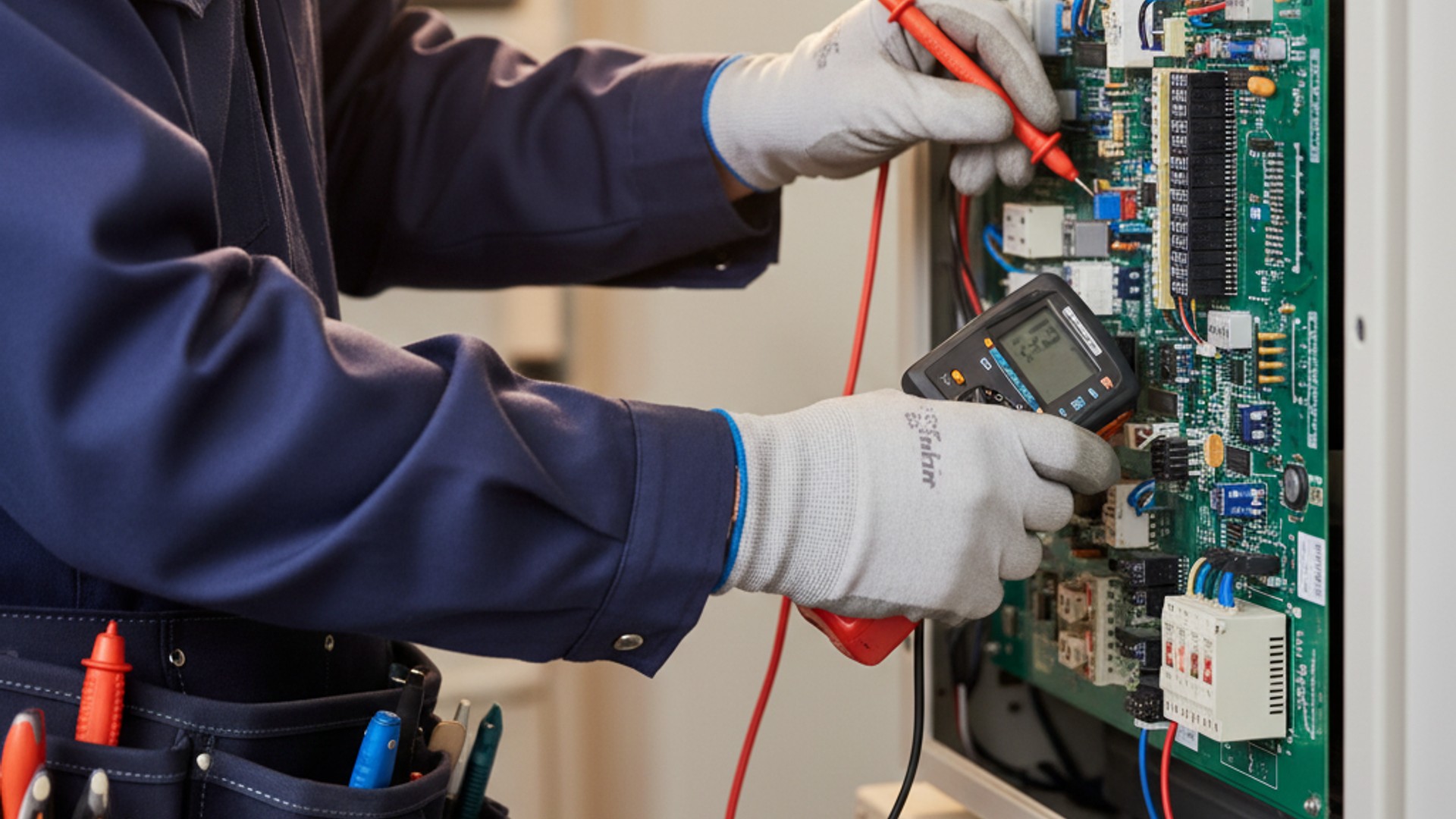
Dual-run capacitors in Sugar Land sun-baked attics last 4–7 years instead of the national 8–12 year average. The dielectric cooks above 130°F. Test with a multi-meter in microfarad mode: 35/5 cap should read within ±5% of 35 on the C and 5 on the FAN. If the 5 mfd side reads 4.0 mfd or below, replace before July. While you’re in the panel, cycle the contactor 30 times by hand. Pitted contacts that don’t seat smoothly or that show a black scorch line need replacement — summer cycling will weld them shut.
Step 4 — Flush the condensate path and replace the float switch
Houston humidity means a 4-ton system produces 18–26 gallons of condensate per day. Primary drain line, secondary drain pan, condensate trap, and float switch all see continuous wet service. Pour a 1:16 white-vinegar flush through the primary drain access tee, confirm the trap holds water after the cycle ends, and verify the float switch trips within ½ inch of pan waterline. Replace cheap poly float switches with a metal-bodied Safe-T-Switch or Rectorseal SS2 — the cheap plastic ones crack at year 4.
Step 5 — Surge-protect the disconnect and the air-handler control board
Houston summer storms produce 30–50 nearby lightning strikes per storm-cell. A whole-home surge protector at the meter is best; an HVAC-specific surge suppressor at the disconnect catches the rest. Both Eaton CHSPT2ULTRA and Intermatic IG1200 have been field-tested against summer Texas grids. On variable-speed systems the inverter board costs $850–1,400 to replace — a $160 surge protector that lasts 5+ years is the cheapest line of defense.
HVAC247PRO serves Richmond from our dispatch zones covering Pecan Grove, Long Meadow Farms, Harvest Green, Grand Mission. Common jobs in Richmond include homes in the 77406, 77407, 77469 zip code area and near Fort Bend County Courthouse, George Ranch Historical Park, Richmond Railroad Depot. Typical overnight call-to-driveway time across Richmond is 35–75 minutes depending on the dispatch zone and time of day.
Key steps for Richmond homeowners
- Schedule the tune-up before the last week of April — wait times spike in May.
- Replace the air filter at the first of every month during heavy-use season.
- Trim vegetation to keep 24 inches of clearance on all four sides of the condenser.
- Confirm attic radiant barrier is intact and attic ventilation is not blocked.
- Test the thermostat schedule for the cooling season, not the heating schedule.
Richmond: licensed HVAC service, available 24/7.
Call HVAC247PRO at (832) 591-7991 — we dispatch the closest licensed tech across Richmond day or night.
Frequently Asked Questions
When is the best time of year to do an AC tune-up in Sugar Land?
Late February through mid-April is the sweet spot. Demand is moderate, schedules are open, and any refrigerant top-ups have time to settle before the May load spike.
How long does a summer AC prep visit typically take?
A proper 12-point summer prep visit runs 75–110 minutes for a residential system, including diagnostic, coil cleaning, condensate flush, capacitor test, refrigerant check, contactor inspection, and a thermostat firmware update.
Do I need a tune-up if my AC seems to be working fine?
Yes. Roughly 70% of the prep work above catches problems that are silent until the third 100°F day in a row. By the time symptoms appear, it’s typically a 2 AM emergency call in August.