On this page ▾
- Why Ductwork Maintenance Matters for Sugar Land Businesses
- The Hidden Cost of Neglected Ductwork
- Houston's Climate Amplifies Ductwork Problems
- Commercial Ductwork Inspection: What's Involved
- Visual Inspection
- Duct Leakage Testing (Blower Door / Duct Blaster)
- Thermal Imaging
- Pressure Mapping
- Indoor Air Quality Testing
- Professional Duct Sealing Methods
- Mastic Sealant Application
- Aeroseal Technology
- Mechanical Fasteners and Sealing
- What NOT to Use: The Duct Tape Myth
- Developing a Ductwork Maintenance Program
- Annual Maintenance Tasks
- Bi-Annual Deep Inspection
- Every 3-5 Years
- Duct Insulation: Critical for Sugar Land's Climate
- Insulation Requirements
- Condensation Prevention
- Signs of Inadequate Duct Insulation
- Common Commercial Ductwork Problems in Sugar Land
- Flexible Duct Abuse
- Duct Board Deterioration
- VAV Box Problems
- Hurricane and Storm Damage
- Ductwork Service Costs and Return on Investment
- Inspection Costs
- Sealing and Repair Costs
- ROI Calculation Example
- Additional Benefits Beyond Energy Savings
- Frequently Asked Questions
Why Ductwork Maintenance Matters for Sugar Land Businesses
Commercial ductwork represents the circulatory system of your HVAC installation. While business owners often focus on compressors, air handlers, and rooftop units, the hundreds or thousands of linear feet of ductwork connecting this equipment to occupied spaces frequently goes overlooked until serious problems develop. In Houston's demanding climate, where HVAC systems run 8-10 months per year, ductwork maintenance directly impacts energy costs, indoor air quality, and occupant comfort.
The Hidden Cost of Neglected Ductwork
The Department of Energy estimates that duct leakage in commercial buildings averages 25-40% of total system airflow. For a Houston office building with monthly HVAC costs of $5,000, this translates to $1,250-$2,000 wasted every month on conditioning air that escapes into ceiling plenums, mechanical rooms, and unconditioned spaces. Over a 10-year period, this represents $150,000-$240,000 in preventable energy waste.
| Building Size | Monthly HVAC Cost | 25% Duct Leakage Loss | Annual Waste |
|---|---|---|---|
| 5,000 sq ft | $800 | $200/month | $2,400 |
| 15,000 sq ft | $2,400 | $600/month | $7,200 |
| 50,000 sq ft | $8,000 | $2,000/month | $24,000 |
| 100,000 sq ft | $16,000 | $4,000/month | $48,000 |
Houston's Climate Amplifies Ductwork Problems
Houston's subtropical climate creates unique challenges for commercial ductwork that don't exist in drier regions:
- Extreme temperature differentials: When 72°F supply air travels through 130°F+ attic spaces during summer, any duct leakage draws in superheated air that overwhelms cooling capacity
- High humidity infiltration: Duct leaks in humid spaces introduce moisture into the airstream, promoting mold growth on coils and inside ductwork
- Condensation risks: Improperly insulated ducts sweat profusely in Sugar Land's humidity, causing water damage, mold growth, and insulation degradation
- Extended operating seasons: Houston HVAC systems run 10+ months annually, accelerating wear on duct joints, connections, and seals
- Hurricane and storm damage: High winds, pressure changes, and water intrusion from Gulf storms can damage exposed ductwork and create new leak points
Commercial Ductwork Inspection: What's Involved
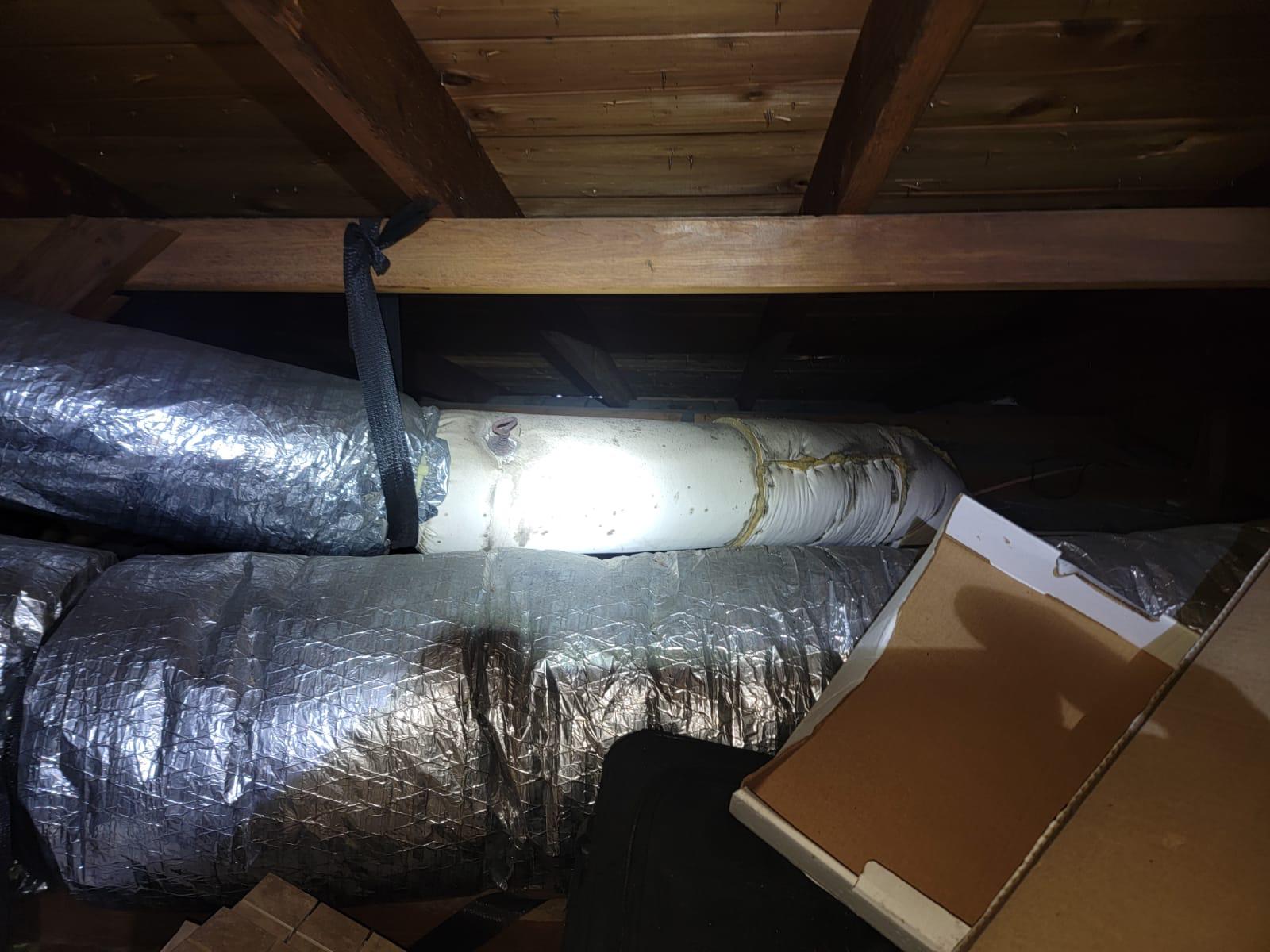
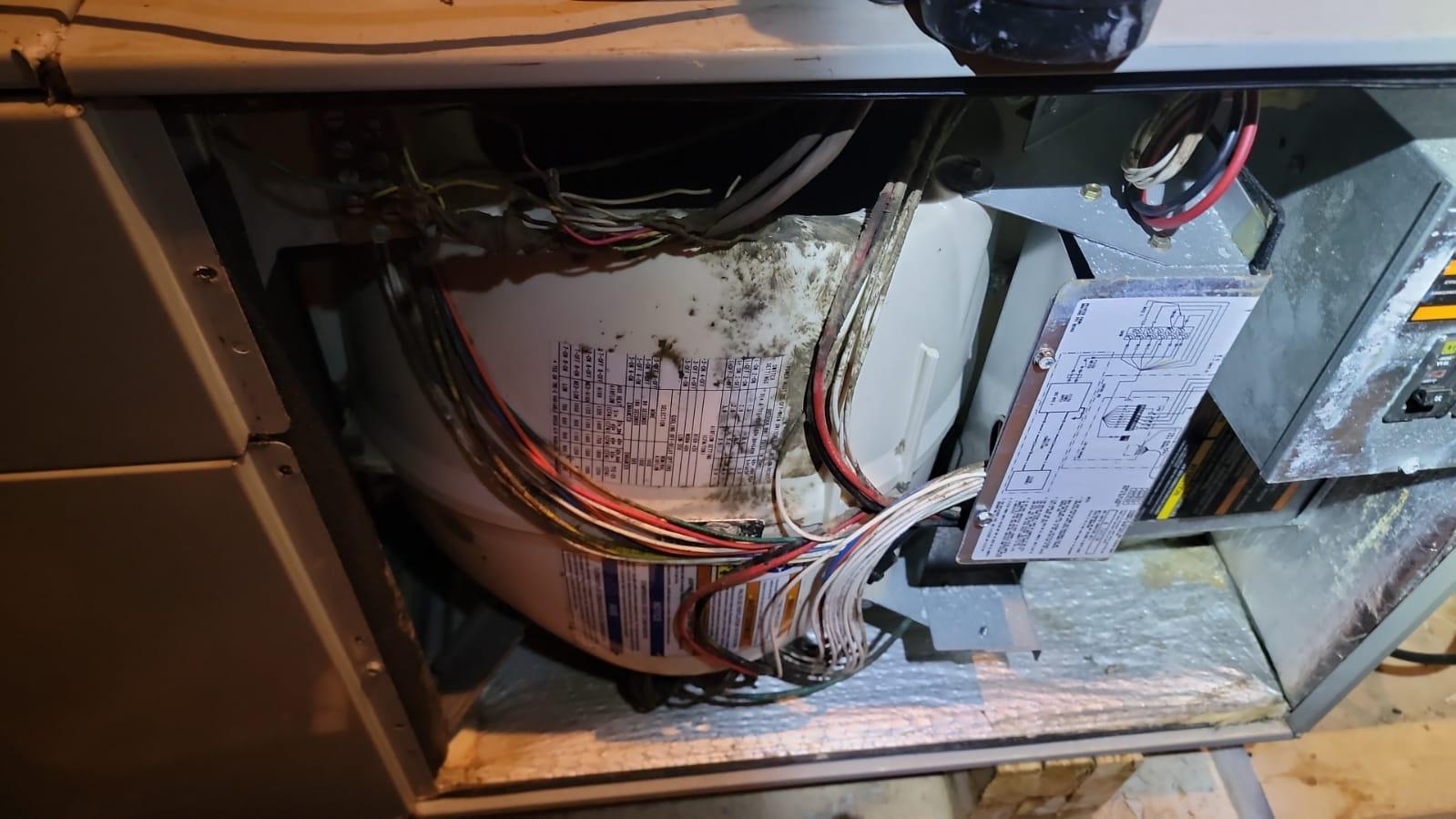
Professional ductwork inspection goes far beyond visual examination. Comprehensive assessments use multiple testing methods to identify leakage, insulation problems, contamination, and structural issues that affect system performance. HVAC247PRO's commercial duct inspections include the following components:
Visual Inspection
Trained technicians examine accessible ductwork for obvious problems including:
- Disconnected joints and separated sections
- Crushed, kinked, or collapsed flexible duct runs
- Missing or deteriorated insulation
- Visible mold, rust, or corrosion
- Failed duct tape and degraded seals
- Damage from rodents, birds, or insects
- Evidence of water intrusion or staining
- Improper supports causing sagging
Duct Leakage Testing (Blower Door / Duct Blaster)
Quantitative duct leakage testing provides precise measurement of how much air escapes before reaching supply registers. This testing involves pressurizing the duct system to a standard pressure (typically 25 pascals) and measuring airflow required to maintain that pressure. Results are expressed as CFM25 (cubic feet per minute at 25 pascals) or as a percentage of total system airflow.
| Leakage Rate | Classification | Recommended Action |
|---|---|---|
| <5% of airflow | Excellent | Routine maintenance only |
| 5-10% of airflow | Good | Minor sealing at joints |
| 10-20% of airflow | Fair | Professional sealing recommended |
| 20-30% of airflow | Poor | Comprehensive sealing required |
| >30% of airflow | Critical | Major repairs or replacement |
Thermal Imaging
Infrared thermal cameras reveal temperature differentials that indicate duct leakage, missing insulation, and thermal bypasses invisible to the naked eye. During cooling season, leaking ducts appear as cold spots in ceiling plenums and mechanical spaces. Missing insulation shows as hot sections along otherwise cool duct runs. Thermal imaging provides non-invasive assessment of ductwork hidden behind walls and above ceilings without requiring demolition.
Pressure Mapping
Static pressure measurements at multiple points throughout the duct system identify restrictions, undersized ductwork, closed dampers, and other airflow problems. Excessive pressure drops indicate design issues, blockages, or component problems requiring attention. Pressure mapping also verifies that zone dampers and VAV boxes operate correctly.
Indoor Air Quality Testing
For buildings with IAQ concerns, ductwork inspection may include air sampling for mold spores, bacteria, particulate matter, and volatile organic compounds. Elevated contamination levels indicate duct cleaning requirements or humidity control problems allowing microbial growth.
HVAC trouble can't wait in Sugar Land heat
Our licensed techs are standing by 24/7 for fast, reliable service.
Professional Duct Sealing Methods
Once inspection identifies leakage points, professional sealing restores duct integrity and system efficiency. Several methods are available depending on duct type, accessibility, and severity of leakage:
Mastic Sealant Application
Water-based mastic sealant is the gold standard for accessible duct joints and connections. Unlike duct tape, which degrades within months to years, properly applied mastic remains flexible and airtight for 20+ years. Mastic works on metal, fiberglass duct board, and flexible duct materials.
Application process:
- Clean joint surfaces of dust, oil, and debris
- Apply first coat of mastic with brush or gloved hand
- Embed fiberglass mesh tape for joints exceeding 1/4 inch
- Apply second coat covering mesh completely
- Allow 24-48 hours curing before system operation
Aeroseal Technology
Aeroseal represents the most significant advancement in duct sealing technology over the past 25 years. This patented process seals ducts from the inside, reaching leaks in inaccessible locations behind walls, above ceilings, and within building cavities.
How Aeroseal works:
- Registers and grilles are temporarily blocked
- Duct system is pressurized
- Non-toxic polymer particles are injected into the airstream
- Particles adhere to leak edges, building up until sealed
- Computer monitors pressure changes to verify sealing
- Process completes in 4-8 hours for most systems
Aeroseal achieves 90-95% reduction in duct leakage and is particularly valuable for:
- Buildings with inaccessible ductwork
- Historic structures where demolition is unacceptable
- Occupied spaces requiring minimal disruption
- Systems with extensive small leaks throughout
Mechanical Fasteners and Sealing
For loose or disconnected duct sections, mechanical fastening precedes sealing. Sheet metal screws, pop rivets, or draw bands secure joints before mastic or aluminum tape application. This combination provides both structural connection and air-seal.
What NOT to Use: The Duct Tape Myth
Despite its name, standard cloth-backed duct tape is the worst choice for sealing actual ductwork. Lawrence Berkeley National Laboratory testing found that duct tape failed on all samples within 3 months to 5 years, depending on temperature exposure. The adhesive dries out, the backing deteriorates, and seals fail. Only UL-181 rated foil tape or mastic sealant provide permanent duct sealing.
Developing a Ductwork Maintenance Program
Effective ductwork maintenance extends beyond periodic sealing to include regular inspection, cleaning, and system balancing. HVAC247PRO recommends the following maintenance schedule for Sugar Land commercial buildings:
Annual Maintenance Tasks
- Visual inspection of accessible ductwork for damage, disconnection, or deterioration
- Filter replacement at all air handlers and return plenums
- Damper operation verification for zone systems and VAV boxes
- Condensate drain inspection where ducts pass through humid spaces
- Insulation condition check for exposed duct runs
- Supply register airflow verification at representative locations
Bi-Annual Deep Inspection
- Comprehensive visual survey including camera inspection of interior surfaces
- Static pressure testing at air handlers and major branches
- Thermal imaging of accessible duct runs during system operation
- IAQ spot sampling if contamination concerns exist
Every 3-5 Years
- Quantitative duct leakage testing with blower door or duct blaster
- Professional duct cleaning if contamination is identified
- Sealing of identified leaks using mastic or Aeroseal
- System balancing to verify proper airflow to all zones

Duct Insulation: Critical for Sugar Land's Climate
Proper duct insulation prevents two costly problems in Sugar Land's climate: energy loss and condensation. Ducts running through unconditioned attics, mechanical rooms, or exterior spaces require adequate insulation to maintain supply air temperatures and prevent moisture problems.
Insulation Requirements
| Duct Location | Minimum R-Value | Recommended R-Value |
|---|---|---|
| Conditioned space | None required | R-4 (acoustic benefits) |
| Unconditioned attic | R-6 | R-8 to R-11 |
| Exterior/exposed | R-8 | R-11 with vapor barrier |
| Unconditioned basement | R-4 | R-6 |
| Garage | R-6 | R-8 |
Condensation Prevention
In Houston's 70-90% outdoor humidity environment, cold supply ducts act as condensation magnets. When warm, humid air contacts duct surfaces below the dew point, moisture forms and drips. This causes:
- Ceiling staining and water damage
- Mold growth on duct surfaces and surrounding materials
- Insulation saturation and R-value loss
- Corrosion of metal ductwork
- IAQ problems from biological growth
Preventing condensation requires adequate insulation thickness AND continuous vapor barrier facing toward the warm, humid side (exterior in cooling-dominated climates). All insulation seams must be sealed with vapor-barrier tape, and penetrations must be properly detailed.
Signs of Inadequate Duct Insulation
- Water staining on ceiling tiles below duct runs
- Visible condensation dripping from ducts or fittings
- Mold or mildew odors near ductwork
- Wet or compressed fiberglass insulation
- Corrosion or rust on metal duct surfaces
- Difficulty achieving setpoint temperatures
Common Commercial Ductwork Problems in Sugar Land
Fifteen years of commercial HVAC service across Greater Sugar Land has revealed consistent ductwork issues affecting businesses across all industries. Understanding these common problems helps facility managers recognize warning signs early:
Flexible Duct Abuse
Flexible ductwork offers installation convenience but is frequently misused in commercial applications. Common problems include:
- Excessive length: Flex duct should connect directly between takeoffs and registers—long, winding runs create major friction losses
- Improper support: Sagging flex duct restricts airflow at low points
- Sharp bends: Flex duct kinked around obstacles reduces effective diameter
- Compression: Pushing flex duct through tight spaces bunches the core
- Undersizing: Flex duct must be upsized one nominal diameter compared to metal for equivalent airflow
Duct Board Deterioration
Fiberglass duct board (rigid fiberglass panels formed into rectangular ducts) degrades over time, especially in humid environments:
- Outer facing separates from fiberglass core
- Corners fail at folded joints
- Moisture absorption reduces R-value and promotes mold
- Fiberglass particles shed into airstream
- Rodent and insect damage is difficult to seal
VAV Box Problems
Variable Air Volume (VAV) systems depend on proper box operation for zone control:
- Actuator failures leave dampers stuck open or closed
- Control wiring problems cause erratic behavior
- Reheat coil fouling reduces heating capacity
- Minimum flow settings prevent proper zone conditioning
- Sound attenuators become contaminated
Hurricane and Storm Damage
Houston's exposure to tropical weather creates unique ductwork vulnerabilities:
- Rooftop duct connections damaged by high winds
- Water intrusion through roof penetrations
- Pressure differentials popping duct connections
- Debris impact on exposed ductwork
- Flooding of basement or ground-level duct runs
Ductwork Service Costs and Return on Investment
Understanding ductwork service costs helps facility managers budget appropriately and evaluate ROI:
Inspection Costs
| Service | Small Building (<10K sq ft) | Medium (10-50K sq ft) | Large (>50K sq ft) |
|---|---|---|---|
| Visual inspection | $150-$300 | $300-$600 | $600-$1,200 |
| Duct leakage testing | $300-$500 | $500-$1,000 | $1,000-$2,500 |
| Thermal imaging | $200-$400 | $400-$800 | $800-$1,500 |
| Comprehensive assessment | $500-$1,000 | $1,000-$2,000 | $2,000-$4,000 |
Sealing and Repair Costs
| Service | Typical Cost | Notes |
|---|---|---|
| Mastic sealing (manual) | $0.25-$0.50/sq ft duct surface | Accessible ducts only |
| Aeroseal treatment | $1,500-$5,000+ per system | Seals inaccessible leaks |
| Insulation repair/replacement | $2-$6/linear foot | Depends on insulation type |
| Flex duct replacement | $15-$35/linear foot installed | Including insulated flex |
| Sheet metal repair | $50-$150/hour + materials | Custom fabrication extra |
ROI Calculation Example
Consider a 25,000 sq ft Houston office building spending $3,000 monthly on HVAC energy with 30% duct leakage:
- Current energy waste: $3,000 × 30% = $900/month = $10,800/year
- Aeroseal cost: $3,500 (typical for this building size)
- Post-sealing leakage: 5% (typical Aeroseal result)
- New energy waste: $3,000 × 5% = $150/month = $1,800/year
- Annual savings: $10,800 - $1,800 = $9,000
- Simple payback: $3,500 ÷ $9,000 = 4.7 months
Most commercial duct sealing projects achieve payback within 1-3 years while providing ongoing savings for the 20+ year lifespan of proper sealing.
Additional Benefits Beyond Energy Savings
- Improved comfort: Consistent temperatures throughout building
- Better IAQ: Reduced infiltration of unconditioned, unfiltered air
- Extended equipment life: Systems work less hard when ducts deliver air efficiently
- Reduced maintenance: Fewer comfort complaints and service calls
- Code compliance: Modern energy codes require duct sealing documentation
Frequently Asked Questions
Commercial ductwork should be professionally inspected every 2-3 years minimum, though annual inspections are recommended for high-use facilities, buildings over 20 years old, or environments with high dust, humidity, or contaminant exposure. In Houston's humid climate, more frequent inspections help identify moisture infiltration and mold growth early. Buildings with documented IAQ complaints, visible duct damage, or unexplained energy cost increases should schedule immediate inspections regardless of timeline. HVAC247PRO offers comprehensive duct inspection services including visual assessment, thermal imaging, and quantitative leakage testing.
Leaky commercial ductwork typically wastes 20-40% of conditioned air before it reaches occupied spaces. For a Houston office building spending $50,000 annually on cooling, duct leakage could represent $10,000-$20,000 in wasted energy every year. The Department of Energy estimates that sealing duct leaks provides one of the highest ROI energy improvements available, with payback periods often under 2 years for commercial facilities. Buildings in unconditioned attic spaces or with extensive duct runs through warehouses and mechanical rooms experience the highest losses due to greater temperature differentials.
Despite its name, standard cloth-backed duct tape fails quickly on ductwork due to temperature cycling and dust accumulation—it typically degrades within 1-5 years. Laboratory testing found duct tape fails on all samples regardless of brand or price. Mastic sealant is a water-based adhesive compound that remains permanently flexible, bonds to metal and fiberglass, and lasts 20+ years when properly applied. Professional duct sealing uses fiber-reinforced mastic for joints over 1/4 inch, creating airtight seals that withstand decades of HVAC operation. Aeroseal technology offers another option, sealing ducts from the inside using aerosolized polymer particles that seek out and seal leak points automatically.
Commercial duct sealing in Sugar Land costs $0.25-$0.50 per square foot of duct surface area for manual mastic sealing of accessible joints, or $1,500-$5,000+ for Aeroseal treatment depending on system size and complexity. A typical 10,000 sq ft office building with 2,000 sq ft of ductwork might spend $500-$1,000 for manual sealing of accessible connections or $2,500-$4,000 for comprehensive Aeroseal treatment reaching hidden leaks. Given energy savings of 20-30%, payback periods average 1-3 years, making duct sealing one of the most cost-effective HVAC improvements available. HVAC247PRO provides upfront assessments and upfront pricing for all duct sealing services.
Cleaning is appropriate when ductwork is structurally sound but contaminated with dust, debris, mold, or biological growth. Professional duct cleaning removes accumulated contaminants and restores airflow. Replacement becomes necessary when ducts show significant physical damage, corrosion, collapsed sections, persistent moisture problems, or extensive duct board deterioration. For metal ductwork over 30 years old with widespread joint failures, or for duct board systems showing compression damage, fiber shedding, or moisture absorption, replacement often proves more cost-effective than repeated repairs. HVAC247PRO technicians provide honest assessments of cleaning vs. replacement economics, helping you make informed decisions about your ductwork investment.
Frequently Asked Questions
Why Ductwork Maintenance Matters for Sugar Land Businesses?
Commercial ductwork represents the circulatory system of your HVAC installation. While business owners often focus on compressors, air handlers, and rooftop units, the hundreds or thousands of linear feet of ductwork connecting this equipment to occupied spaces frequently goes overlooked until serious problems…
What should you know about Commercial Ductwork Inspection: What's Involved?
Professional ductwork inspection goes far beyond visual examination. Comprehensive assessments use multiple testing methods to identify leakage, insulation problems, contamination, and structural issues that affect system performance. HVAC247PRO's commercial duct inspections include the following components:
What should you know about Professional Duct Sealing Methods?
Once inspection identifies leakage points, professional sealing restores duct integrity and system efficiency. Several methods are available depending on duct type, accessibility, and severity of leakage:
What should you know about Developing a Ductwork Maintenance Program?
Effective ductwork maintenance extends beyond periodic sealing to include regular inspection, cleaning, and system balancing. HVAC247PRO recommends the following maintenance schedule for Sugar Land commercial buildings:
What should you know about Duct Insulation: Critical for Sugar Land's Climate?
Proper duct insulation prevents two costly problems in Sugar Land's climate: energy loss and condensation. Ducts running through unconditioned attics, mechanical rooms, or exterior spaces require adequate insulation to maintain supply air temperatures and prevent moisture problems.